
Introduction – (Sugar, Ingredients and Risks)
energy drinks effects
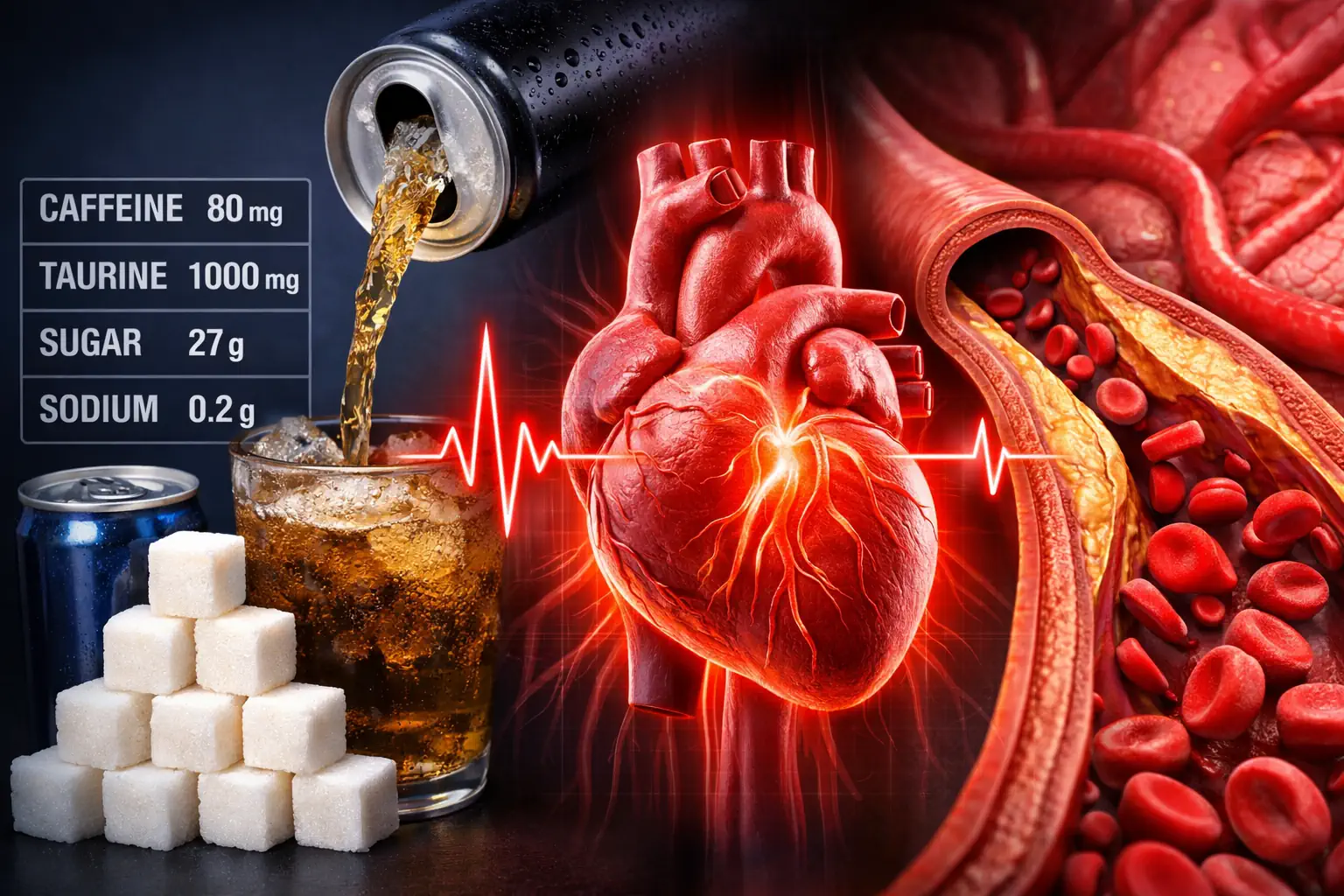
Energy drinks are widely consumed for quick energy and focus. However, their effects on the body—especially on the heart and blood vessels—are more serious than they seem.
Beyond caffeine and sugar, these drinks contain a combination of stimulants that directly impact the cardiovascular system.
What Energy Drinks Contain (Real Values)
For a standard 250 ml can:
| Component | Approximate Amount |
|---|---|
| Sugar | 25–30 g (about 5–7 teaspoons) |
| Caffeine | 80 mg |
| Taurine | 1000 mg |
| Sodium (salt) | 0.1–0.3 g |
| Glucuronolactone | 200–600 mg |
| B Vitamins | B3, B6, B12 |
| Calories | 100–120 kcal |
For a 500 ml can, these values are doubled.
How Much Sugar and Salt Do Energy Drinks Have
Sugar: 25–30 g per can
This exceeds the daily recommended limit by the World Health Organization (25 g).
Sodium: 0.1–0.3 g
While not extremely high, combined with caffeine it can affect blood pressure.
How Energy Drinks Affect the Heart and Blood Vessels
1. Vasoconstriction (Narrowing of Blood Vessels)
Caffeine causes blood vessels to contract, reducing blood flow.
This leads to:
- increased blood pressure
- increased strain on the heart
2. Increased Heart Rate
Caffeine and sugar stimulate the nervous system.
This results in:
- faster heart rate (tachycardia)
- increased cardiac workload
Over time, this can lead to heart fatigue and arrhythmias.
3. Inflammation Inside Blood Vessels
High sugar intake irritates the inner lining of blood vessels (endothelium).
This leads to:
- inflammation
- reduced elasticity
4. Fat Deposits in Arteries (Atherosclerosis)
Excess sugar contributes to fat accumulation in the bloodstream.
Over time:
- plaque builds up in arteries
- blood vessels narrow
- risk of heart attack increases
5. Electrical Imbalance of the Heart
The combination of caffeine, taurine, and other stimulants can affect the heart’s electrical signals.
This may cause:
- palpitations
- irregular heartbeat
What Happens Right After You Drink an Energy Drink
Within 30–60 minutes:
- blood pressure increases
- heart rate rises
- blood vessels constrict
After 2–3 hours:
- energy crash
- fatigue
- reduced focus
Are Sugar-Free Energy Drinks Safer?
Sugar-free versions remove sugar, but still contain caffeine and stimulants.
This means:
- less impact from sugar
- but continued stress on the heart
They are not risk-free.
Long-Term Effects
Frequent consumption may increase the risk of:
- high blood pressure
- cardiovascular disease
- stimulant dependence
- sleep problems
Personal Experience
From my experience, energy drinks provide only temporary energy.
After consumption, there is often a period of restlessness followed by a noticeable crash.
Over time, the body becomes dependent, and the effects on the heart become more visible, including palpitations and increased blood pressure.
Precautions
- avoid daily consumption
- do not mix with alcohol
- avoid if you have heart conditions
- avoid consuming multiple cans per day
Conclusion
Energy drinks contain high levels of sugar and stimulants that directly affect the heart and blood vessels.
They can cause vasoconstriction, inflammation, and long-term cardiovascular risks.
The energy they provide is temporary, but the potential damage can be long-lasting.
FAQ
Do energy drinks affect the heart?
Yes, they can increase heart rate and cause arrhythmias.
What do energy drinks do to blood vessels?
They constrict them and may cause inflammation.
Are they dangerous if consumed daily?
Yes, especially for heart health and blood pressure.
Are they worse than coffee?
In many cases, yes, because they contain sugar and multiple stimulants.
Bibliography (Harvard Style)
World Health Organization (2015). Sugars intake guideline
EFSA (2015). Caffeine safety opinion
Higgins, J.P. & Babu, K. (2018). Energy Drinks and Cardiovascular Risk
Mayo Clinic (2023). Energy drinks and heart health
Legal Note
This article is for informational purposes only and does not replace professional medical advice.