
Introduction (Hidden Sodium and Health Risks)
Salt Intake Effects one of the most underestimated dietary problems today.
The real issue is not just the salt you add to your food, but the hidden sodium found in everyday foods.
Most people believe they eat a normal amount of salt, but in reality, they often consume far more than the recommended limit.
How Much Salt Is Recommended
The recommended maximum intake is:
5 grams per day (about one teaspoon)
However, the reality is very different.
Most people consume between:
8 and 12 grams per day
This is almost double the recommended amount.
What Happens in the Body
Excess salt causes the body to retain water.
This increases blood volume and puts pressure on blood vessels.
As a result:
- blood pressure increases
- fatigue may appear
- the body may feel swollen or heavy
Where Hidden Salt Comes From
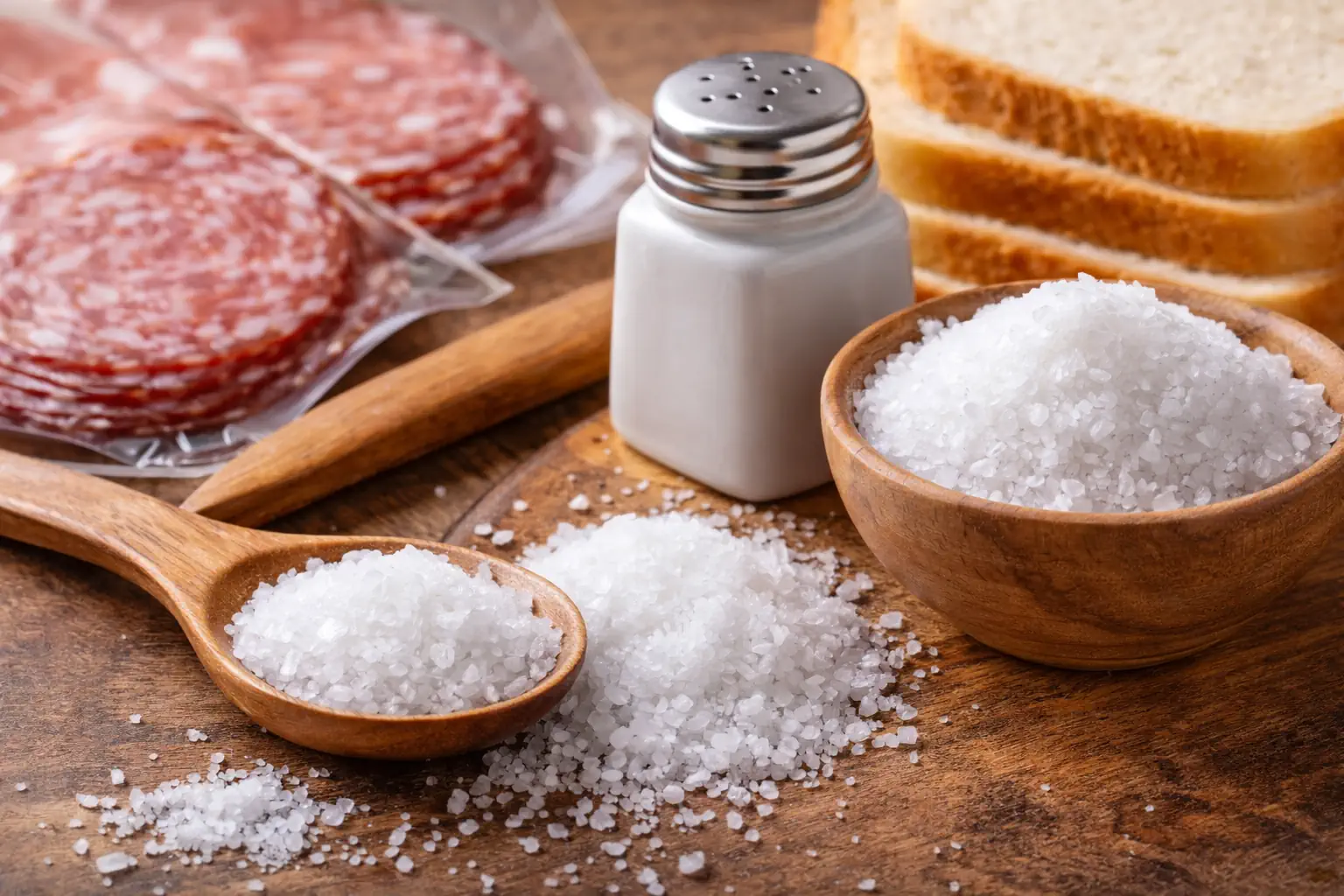
The biggest sources of salt are not obvious.
Most of it comes from processed foods, such as:
- bread
- processed meats
- cheese
- fast food
- snacks
- sauces
These foods can contain significant amounts of sodium even if they don’t taste very salty.
Real-Life Daily Intake Example
A typical day may look like this:
Breakfast
Bread and cheese
About 2 grams of salt
Lunch
Fast food
About 5 to 6 grams
Snack
Chips
About 2 to 3 grams
Dinner
Cooked food and bread
About 2 to 3 grams
Total daily intake:
10 to 14 grams of salt
This is far above the recommended limit.
Impact on the Body
Consistent high salt intake may lead to:
- high blood pressure
- cardiovascular problems
- kidney strain
- fluid retention
Indirect Effects on Overall Health
Although salt is not the main cause of certain conditions, excessive intake may contribute to:
- inflammation
- metabolic imbalance
- overall stress on the body
Signs You Are Consuming Too Much Salt
- frequent thirst
- bloating
- body swelling
- fatigue
Salt Content in Common Foods
| Food | Salt |
|---|---|
| Bread (2 slices) | ~1 g |
| Chips | ~2–3 g |
| Fast food | ~5–7 g |
| Cheese | ~1–2 g |
| Processed meats | ~2–4 g |
Key Idea
The problem is not a single meal.
The problem is daily accumulation.
How to Reduce Salt Intake
- reduce processed foods
- read food labels carefully
- avoid adding salt automatically
- cook simple meals at home
Personal Experience
From my experience, reducing salt intake has noticeable effects quite quickly.
I observed:
- less water retention
- improved energy levels
- a lighter overall feeling
The Benefits of Salt (When Consumed Properly)
Salt is not the enemy when consumed in moderate amounts.
The body needs sodium to function correctly.
Fluid Balance
Sodium helps regulate water balance in the body.
Too little salt may lead to dehydration and fatigue.
Nervous System Function
Salt plays a role in transmitting nerve signals.
Low sodium levels may cause dizziness and weakness.
Muscle Function
Sodium is essential for normal muscle contraction.
A deficiency may lead to muscle cramps.
Blood Pressure Balance
Too little salt may result in low blood pressure and fainting.
The Right Balance
The ideal intake is between:
3 and 5 grams per day
The problem appears when this amount is constantly exceeded.
Conclusion
Salt is not the problem.
Excess salt is the problem.
While it may not seem dangerous in the short term, long-term high intake can lead to serious health issues.
FAQ
What is the main source of salt?
Processed foods, not the salt shaker.
How much salt is too much?
More than 5 grams per day.
Can I reduce it easily?
Yes, start by reducing packaged and processed foods.
Bibliography (Harvard Style)
World Health Organization (2023). Salt intake
NHS (2023). Salt: the facts
Harvard T.H. Chan School of Public Health (2020). Sodium and health
Legal Note
This article is for informational purposes only and does not replace professional medical advice.