
Introduction
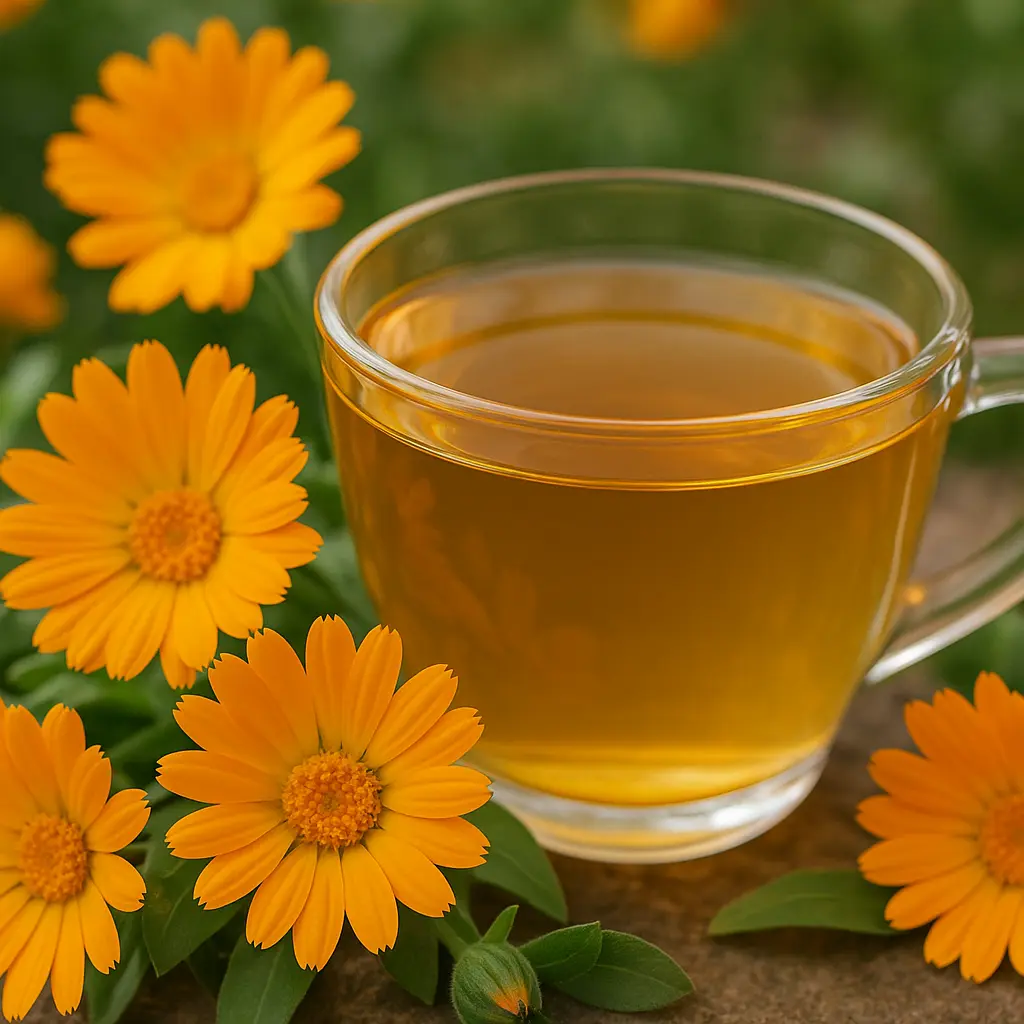
Calendula tea benefits have been known for centuries, this plant being widely used in traditional medicine for its healing and anti-inflammatory effects.
Calendula (Calendula officinalis), also known as pot marigold, is one of the most versatile medicinal plants. It can be used both internally and externally, supporting digestion, skin healing, and overall health.
Due to its active compounds, calendula tea is considered a natural remedy for multiple conditions, especially related to inflammation and irritation.
Properties and benefits of calendula tea
Calendula contains:
- flavonoids
- triterpenoid saponins
- essential oils
- carotenoids
These compounds give the plant strong therapeutic effects.
1. Supports digestive health
Calendula tea helps:
- reduce stomach inflammation
- calm the gastric lining
- support digestion
It can be useful in:
- gastritis
- ulcers
- colitis
2. Detox and liver support
Calendula stimulates bile production, which helps:
- eliminate toxins
- improve fat digestion
- support liver function
3. Skin healing and regeneration
Used externally, calendula tea:
- accelerates wound healing
- reduces inflammation
- supports tissue regeneration
4. Calms skin irritation
It can be applied as compresses for:
- acne
- eczema
- dermatitis
- redness
5. Supports hormonal balance
Calendula may help:
- reduce menstrual discomfort
- ease premenstrual symptoms
6. Boosts the immune system
Thanks to antioxidants, calendula:
- supports immune defense
- helps fight infections
Active compounds and effects
| Active compound | Main effect |
|---|---|
| Flavonoids | Anti-inflammatory, antioxidant |
| Carotenoids | Tissue healing |
| Essential oils | Antiseptic, calming |
| Saponins | Detox, bile stimulation |
| Salicylic acid | Pain and inflammation reduction |
How to prepare calendula tea correctly
Ingredients:
- 1 tablespoon dried calendula flowers
- 250 ml hot water
Preparation:
- Add flowers to a cup
- Pour hot water
- Cover and let infuse 10–15 minutes
- Strain and drink warm
You can consume 1–2 cups per day, preferably between meals.
Precautions and contraindications
- Avoid excessive use during pregnancy
- People allergic to Asteraceae family should avoid it
- May interact with sedatives or anticoagulants
- Do not consume in excess
Personal experience
From my personal experience, calendula tea is one of the most useful natural remedies for both digestion and skin.
I mainly use it:
- for calming stomach irritation
- for better digestion in the evening
- for skin recovery after sun exposure
When applied externally as a compress, the effect is visible quickly. Internally, it helps create a feeling of balance and reduces digestive discomfort.
It’s not a miracle overnight solution, but with consistent use, the results become noticeable.
Conclusion
Calendula tea benefits are wide and well-supported by both traditional use and modern research.
From digestive support to skin healing and liver detox, calendula remains one of the most effective natural remedies available.
Used correctly and consistently, it can be a valuable addition to a natural health routine.
FAQ (Frequently Asked Questions)
Can I drink calendula tea daily?
Yes, in moderate amounts (1–2 cups/day), if no contraindications exist.
Is calendula tea good for acne?
Yes, especially when applied externally due to its antiseptic effects.
Can it be combined with other herbs?
Yes, it works well with chamomile, St. John’s wort, or mint.
What does calendula tea taste like?
It has a mild floral taste, slightly bitter but pleasant.
Bibliography (Harvard style)
Popescu, G. (2019). Medicinal plants of Romania.
Ionescu, M. (2021). Natural plant therapy.
European Medicines Agency (EMA) (2023). Calendula officinalis monograph.
Legal note
This article is for informational purposes only and does not replace professional medical advice.