
Introduction
People looking for omega alternatives fish are usually trying to replace fish in a diet while still making informed choices about omega-3 fats. The practical answer is that plant foods can provide alpha-linolenic acid (ALA), while algae-based products may provide the longer-chain omega-3s commonly associated with seafood.
This is general nutrition information, not individual medical or legal advice. Product rules, label wording, and access to fortified foods can vary by jurisdiction, and anyone managing a health condition, pregnancy, medication use, or a restricted diet should seek advice from a qualified clinician or pharmacist.
What does “omega alternatives fish” mean?
The phrase usually refers to foods and supplements used instead of fish as a source of omega-3 fatty acids. It is helpful to separate the main types rather than treating every omega-3 source as interchangeable.
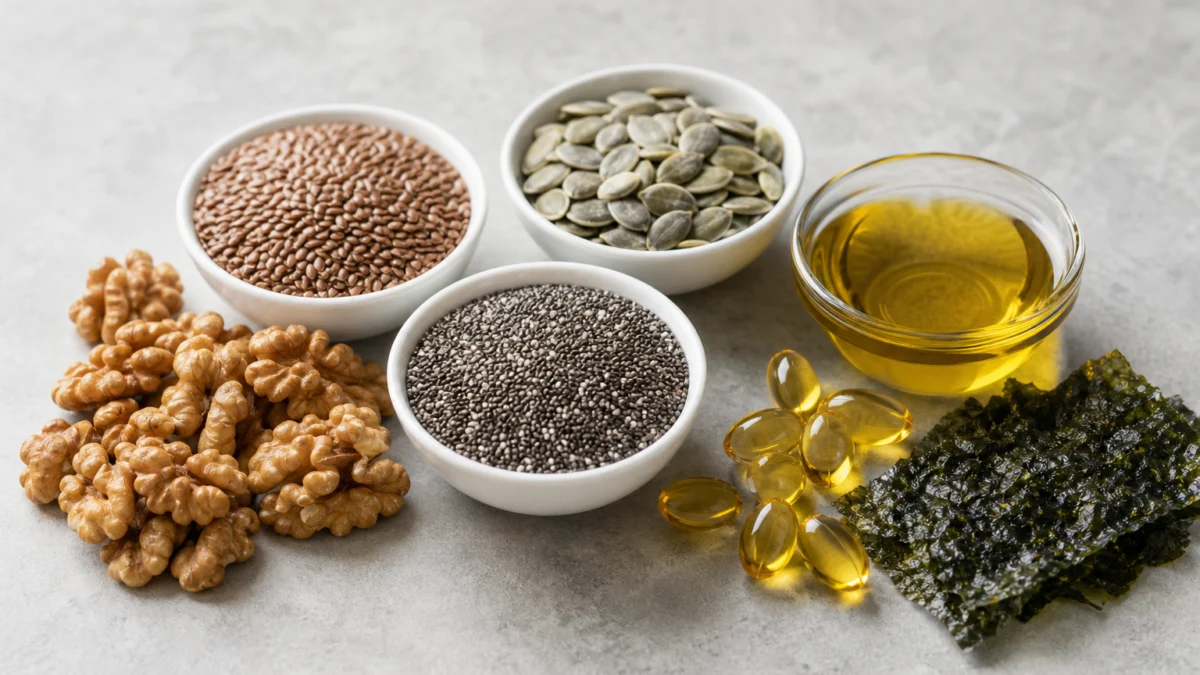
ALA is found in several plant foods, including flaxseed, chia seeds, walnuts, hemp seeds, and some plant oils. EPA and DHA are longer-chain omega-3 fats. Fish contain EPA and DHA because they acquire them through the marine food chain; algae are the original direct source in that chain. Algae oil is therefore a non-fish option that may contain DHA, EPA, or both, depending on the product.
A person can eat a varied plant-based diet without fish, but the best approach depends on why fish is being avoided, what other foods are eaten, and whether the goal is simply dietary variety or a specific nutrient plan.
Can plant foods fully replace fish?
Plant foods can make an important contribution to omega-3 intake, particularly through ALA. However, they are not automatically a one-for-one replacement for fish because ALA, EPA, and DHA are different fatty acids. The body can convert some ALA into longer-chain forms, but that conversion is limited and can vary between individuals. For that reason, someone who wants a direct non-fish source of DHA or EPA may consider algae-derived foods or supplements after obtaining appropriate advice.
Replacing fish also involves more than omega-3 fats. Fish may contribute protein, iodine, vitamin D, vitamin B12, selenium, and other nutrients depending on the type of fish and the wider diet. A replacement plan should therefore look at the whole eating pattern rather than assuming one seed, oil, or capsule covers every nutritional role.
Which foods provide plant-based omega-3?
Several everyday foods contain ALA and can be used regularly in meals. Whole foods are often easier to fit into a balanced diet because they can also contribute fibre, protein, or unsaturated fats. Portions and nutrient content vary by product, so packaging and local food-composition information are more useful than assumptions.
- Ground flaxseed or flaxseed oil: Ground seed can be mixed into porridge, yoghurt alternatives, baking, or sauces. Oil supplies fat but does not offer the fibre found in the seed.
- Chia seeds: These can be added to oats, puddings, smoothies, or baked dishes. They absorb liquid, so preparation matters for texture and comfort.
- Walnuts: A convenient snack or topping for salads and grain dishes, while also adding energy and other fats.
- Hemp seeds: Mild in flavour and easy to scatter over meals; they can complement, rather than replace, other sources.
- Rapeseed oil and soybean oil: Depending on local availability and dietary preferences, these oils may be useful cooking options with some ALA.
- Fortified foods: Some plant drinks, spreads, or other foods are fortified with omega-3s. Check the label to identify the type and amount actually provided.
How do ALA, EPA, and DHA compare?
The table below is a practical guide to the differences. It does not establish that any one option is suitable for every person or that a food or supplement will produce a particular health outcome.
| Option | Main omega-3 form | Typical role in a fish-free diet | Key limitation |
|---|---|---|---|
| Flax, chia, walnuts, hemp, selected oils | ALA | Regular plant-food source of omega-3 | Does not directly supply DHA or EPA |
| Algae oil | DHA, sometimes EPA | Direct non-fish source of longer-chain omega-3s | Formulation and amount differ between products |
| Fortified foods | Varies | May add omega-3 within normal meals | Must be checked product by product |
| Fish oil products | Usually EPA and DHA | Not suitable for people seeking a fish-free option | Not a fish alternative |
Is algae oil a suitable alternative to fish oil?
Algae oil is commonly considered by people who do not eat fish, follow vegetarian or vegan diets, have fish allergies, or prefer to avoid fish-derived products. It can be a direct source of DHA and, in some formulations, EPA. That makes it materially different from flaxseed or chia, which principally provide ALA.
Suitability still depends on the exact product and the individual. Labels should identify the omega-3 form, amount per serving, ingredients, allergens, recommended use, storage instructions, and whether the product is appropriate for the intended user group. Do not assume that “plant-based,” “marine,” or “omega-3” alone tells you how much DHA or EPA is present.
For consumers, it is also sensible to keep advertising claims in perspective. A label may describe a nutrient, but it does not replace individualized assessment of diet, medicines, or health needs. Where local rules apply, official consumer or food-safety authorities are the appropriate place to check current requirements and complaint routes.
What should I check on a supplement or fortified-food label?
Start with the nutrition panel and ingredient list, not the front-of-pack marketing. Check whether the product provides ALA, DHA, EPA, or a combination. Next, identify the serving size and the amount supplied per serving. A serving suggestion is not necessarily the right amount for every person.
Also review the following points:
- Whether the product contains fish, shellfish, gelatine, or other ingredients that conflict with an allergy, diet, or ethical preference.
- Whether it is a food, a supplement, or a fortified product, as the rules and intended use may differ.
- The use-by or best-before date and any storage directions, especially for oils that can deteriorate when poorly stored.
- Any cautions aimed at children, pregnant or breastfeeding people, or people taking medicines.
- Whether a health claim appears to be specific, understandable, and consistent with information required on the package.
If a label is unclear, contact the manufacturer or retailer for clarification rather than relying on social-media summaries. Keep a photograph or receipt if you need to raise a consumer concern about a product description.
Are there safety issues with non-fish omega-3 sources?
Food sources such as nuts and seeds are not risk-free for everyone. Allergies, intolerances, swallowing difficulties, digestive symptoms, and calorie needs can affect whether a particular food works well. Whole or dry seeds may be unsuitable for some people unless prepared appropriately. Oils and supplements can also interact with an individual’s broader dietary pattern.
Important limitation: Do not start, stop, or change a supplement regimen solely because a general article describes omega alternatives fish. People who use medicines that affect bleeding or clotting, have planned surgery, are pregnant or breastfeeding, have a medical condition, or are choosing products for a child should ask a clinician or pharmacist for individualized guidance.
Quality is another limitation. Supplements are not identical merely because they use similar language. Product composition, capsule ingredients, testing practices, and regulatory oversight can vary by country and by manufacturer. Avoid treating a supplement as a substitute for professional care or as a guaranteed solution to a health concern.
How can I build fish-free meals around omega-3 foods?
A sustainable approach is usually to include suitable ALA foods routinely instead of trying to add large amounts occasionally. For example, breakfast might include oats with ground flaxseed and walnuts. Lunch could use a rapeseed-oil dressing on a bean or grain salad. Dinner might include tofu, lentils, or another protein source with vegetables and a sauce containing tahini, hemp seeds, or crushed walnuts.
These are meal ideas, not prescribed plans. The wider diet still needs adequate protein, energy, and micronutrients. People following a fully plant-based diet may need to pay particular attention to nutrients that are often supplied by animal foods, but individual needs differ. A registered dietitian can help translate preferences, allergies, culture, budget, and medical considerations into a practical plan.
What can consumers do if a product claim seems misleading?
First, preserve the package, receipt, and any advertisement that influenced the purchase. Note the exact wording, the product name, batch information if shown, and where it was bought. Then contact the seller or manufacturer and state clearly what information you believe was unclear or inaccurate.
If the response does not resolve the issue, use the consumer-protection, food-safety, or trading-standards route available in your jurisdiction. Procedures, agencies, and deadlines vary, so this article cannot identify a universal complaint process. Official public-service websites can explain the current local pathway. This consumer step is separate from medical questions about whether a product is appropriate for you.
Frequently asked questions about omega alternatives fish
Are flaxseed and chia the same as fish oil?
No. Flaxseed and chia are plant sources of ALA, whereas fish oil generally supplies EPA and DHA. They can be useful parts of a fish-free diet, but they are not chemically identical substitutes.
Can a vegan get DHA without eating fish?
Algae-derived products may provide DHA without using fish. Check the individual label because some products provide DHA only, while others may include EPA as well. Seek individualized advice where health circumstances or medication use are relevant.
Should everyone who avoids fish take an algae supplement?
Not necessarily. Diet, age, life stage, medical context, and local dietary guidance all matter. A qualified professional can help determine whether a supplement is appropriate and how it fits with the rest of the diet.
Does “omega-3” on a label mean it contains DHA and EPA?
No. The term may refer to different omega-3 fats. Read the panel for the named fatty acid and amount rather than assuming that all omega-3 products provide the same form.
Summary
When considering omega alternatives fish, begin by distinguishing ALA-rich plant foods from algae-derived DHA and EPA. Use clear labels, build meals around varied whole foods where possible, and remember that replacing fish may involve more than one nutrient. For supplements, allergies, medicines, pregnancy, or unclear product claims, individualized professional or official local guidance is the safest next step.